 |
 |
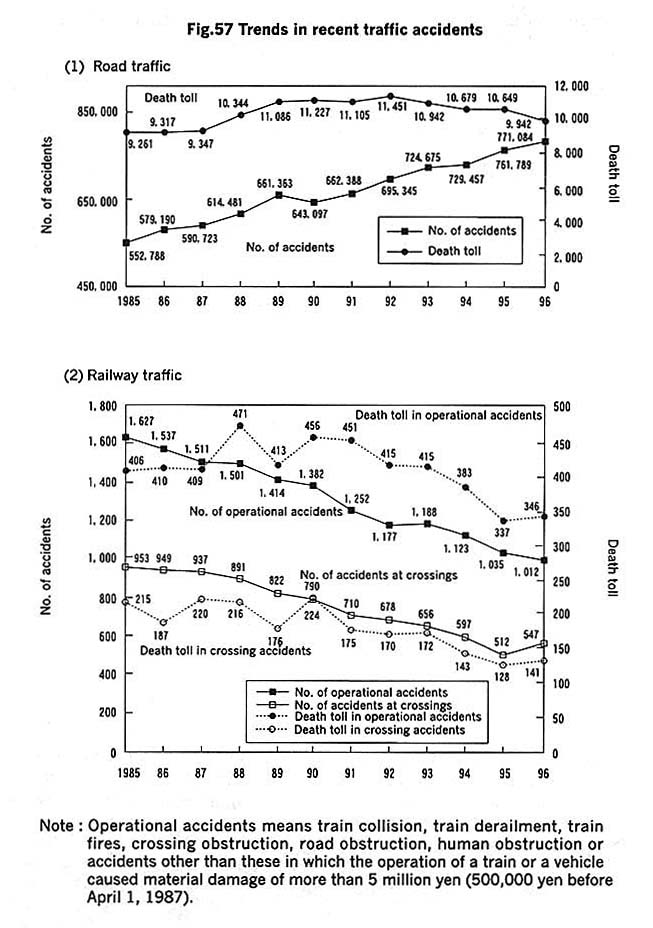
The annual death toll in 1997 fell to below 10,000 for the
first time in the past nine years, however the number of both traffic accidents
and the injured is on the rise. The overall situation of road traffic accidents
still remains serious.
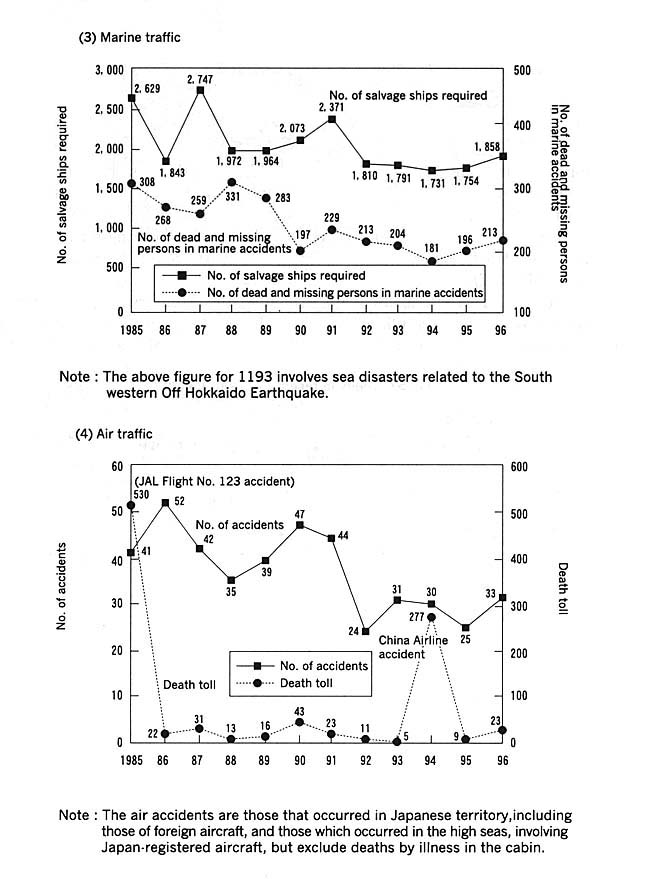
The number of railway accidents is on the decline in the long-term. The
rate of accidents in marine traffic has remained unchanged recently, and those
in air traffic almost unchanged, too (Fig.
57-1,Fig. 57-2).
As secured traffic safety is its main principle, the Ministry is promoting
specific measures for traffic safety on land, in the sea, and in the air, with
anti-accident measures forming the nucleus for all, under the annual MOT Operational
Plan for Traffic Safety.
As Designated Administrative Organs according to the Disaster Countermeasures Basic Act, the Ministry of Transport, the Maritime Safety Agency, and the Meteorological Agency, are comprehensively and systematically promoting; the stepping-up Of forecasting systems for disaster prevention, disaster prevention measures for transport facilities and transportation means, measures for conserving national land, and disaster restoration activities.
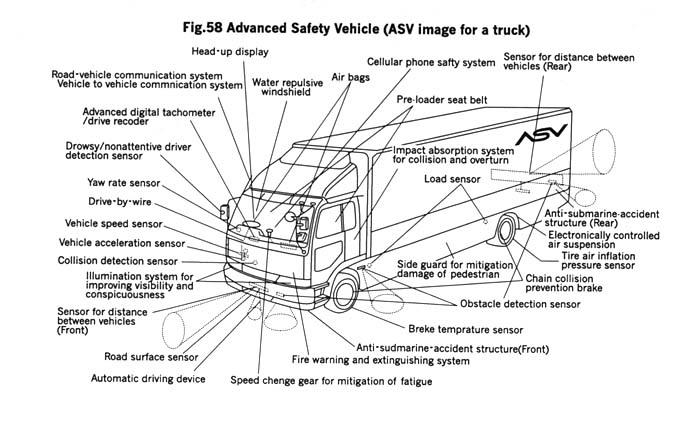
Technological development is playing a major role in securing the smooth mobility of both people and goods. The Ministry is pushing forward with the development of traffic technology which meets the needs of the age, in view of the intent of the Science and Technology Basic Plan, based on findings at the Council for Transport Technology (Fig. 58).
In view of user convenience, improved safety and more effective management, the Ministry is pushing forward with the implementation of EDI (Electronic Data Interchange) and the IC card system into the transport sector, as well as the improvement of meteorological information services. It is also developing a Ministry of Transport Wide Area Information Network System (MOT winks) in order to promote computerization of the transport administration.
|
|