
 |
 |
 |
The Ministry of Transport has promoted various research and development projects through its affiliated organizations, while entrusting some of the projects to private research institutions. Main research projects include the following:
| (1) | Linear motor car This project has been undertaken by the JNR. The vehicle achieved a maximum speed of 517 km/h on a test run in 1979. (Fig. 7) |
| (2) | Navigational technology related to conservation
of energy and resources This project includes comprehensive research on a vessel with an optimum energy-saving system, the development of a computer-controlled, energy-saving engine for vessels, and the development of oil drilling vessels in icy waters and merchant vessels navigable in icy waters |
| (3) | Technology for dredging and expanding ports and harbors This project covers the development of observation systems for coastal waves at a depth of 50 meters and methods to solidify excessively soft ground |
| (4) | Weather forecasting technology Forecasting on the probability of rainfall has been made on an experimental basis since June 1980. |
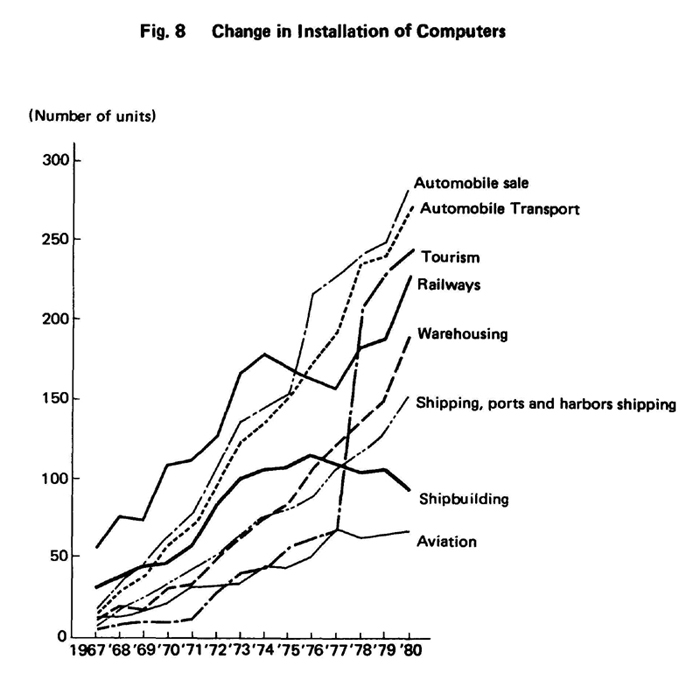
In response to the increased volume of transport and demand for better
and diverse services, the use of computers is progressing in the transport industry
to improve safety, efficiency, and services. (Fig.
8) Here are some of the examples:r
| (1) | Operation control: the COMTRAC system in the JNR shinkansen service |
| (2) | Facilities and materials: the container control system set up in shipping companies |
| (3) | Business and sales: the JALCOM 111 system in Japan Air Lines for reservations and ticket sales |
The Ministry of Transport has also promoted various systems of a highly public nature. Those undertaken during fiscal 1980 include the international freight transport information system and the trucking information network system.
|
|
|