 |
 |
 |
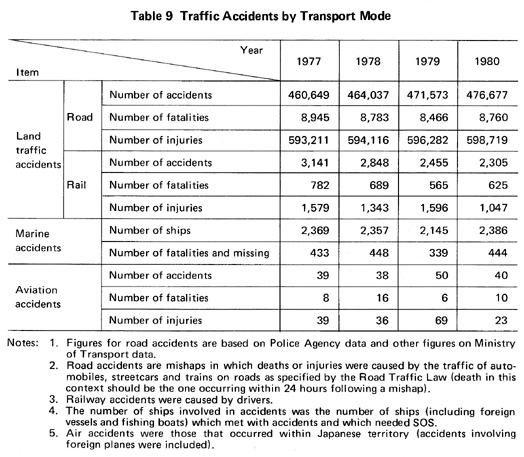
Table 9 shows the situation
of traffic accidents in recent years by mode of transportation.
In accordance with the basic traffic safety program, the Ministry of Transport
each year works out and implements various plans designed to ensure safety in
each transport system, which include the following measures:
| (1) | Highway traffic |
|
i)
|
automobile inspection courses to be increased, and automobile inspection systems to be strengthened by increasing the number of inspectors; |
|
ii)
|
research to be conducted on ways to reduce accidents involving large-size trucks that tend to occur during their left turns, including the lowering of the driver's seat so as to expand his view. |
|
(2)
|
Railway traffic |
|
i)
|
improvements in safety systems, including the introduction of automatic signals and CTC (Centralized Traffic Control)s. |
|
ii)
|
prevention of accidents at crossings, including the construction of three-dimensional systems. |
|
(3)
|
Maritime traffic |
|
i)
|
improvements in navigation control systems by increasing the number of navigation controllers; |
|
ii)
|
traffic control mainly on large-size tankers in areas with heavy traffic; |
|
iii)
|
improvements in long-distance rescue operations. |
|
(4)
|
Air traffic |
|
i)
|
improvements in ARSR (Air Route Surveillance Radar) systems: |
|
ii)
|
improvements in air routes that form VOR (VHF Omnidirectional Radio Range) systems. |
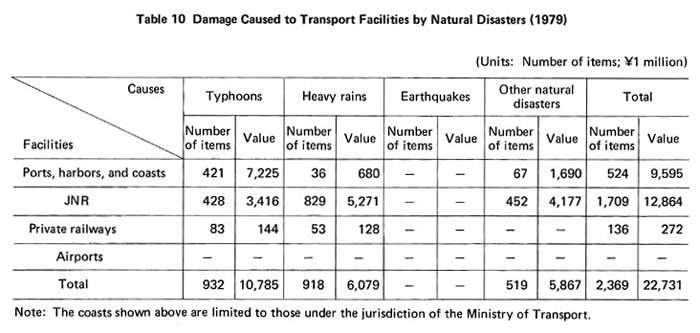
Table 10 shows the damage
caused by natural disasters to transport-related facilities during 1979.
The following measures will be taken to prevent various disasters:
(1) Improvements in systems designed to remove oil leaks in the sea; improvements
in fire fighting systems on the sea; and improvements in oil storage facilities
in the sea.
(2) Improvements in weather observation systems via radars and satellites; and
development of analytic and forecasting technology.
(3) Implementation of drills to prepare for emergencies in accordance with the
earthquake disaster prevention program; and the strengthening of observation
systems in areas with high possibilities of being hit by large-scale earthquakes.
Japan's imports of oil in fiscal 1980 were 4 million 880,000 barrels per
day (hereinafter B/D), nearly 10% lower than the ceiling of 5 million 400,000
B/D (calendar year) set by the IEA and agreed upon during the summit meeting
of industrial nations in Tokyo. This figure represents a decrease of 10.5% from
the previous fiscal year, thanks to the spread of energy conservation in households
and various industrial sectors, including transport, and shifts from oil to
other fuels in industry.
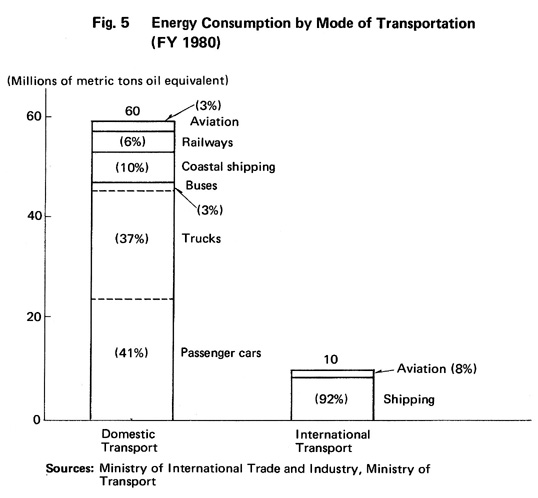
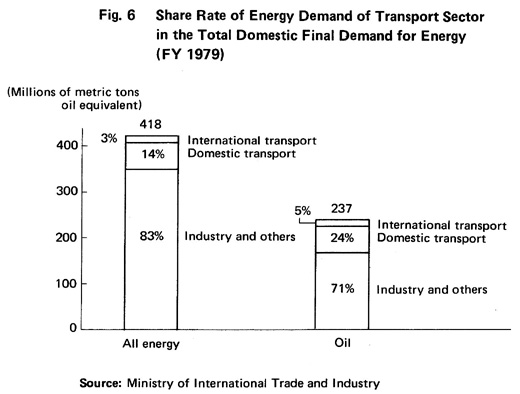
The use of energy in the domestic transport sector during fiscal 1980 reached
60 million tons (calculated in terms of oil; hereinafter the same), and that
in the international transport sector totaled 10 million tons. When combined,
these figures account for 17% of the nation's final demand for energy. By mode
of transportation, automobiles are the biggest users of energy, consuming about
70% of the energy used in the transport industry. The use of gasoline and light
oil holds quite high percentages in the transport industry.
(Figs. 5 and 6)
There is concern that oil supplies may become tight in medium- and long-term
prospects. The transport industry, therefore, needs to promote the following
measures, paying attention to their effects on the environment:
|
(1) |
Energy-saving measures Energy-efficiency of the transport means to be heightened through the development of energy-saving equipment; transport systems with high energy efficiency to be created through induction of demand for mass transportation. |
| (2) | Introduction of alternative sources of energy Electric cars, nuclear-powered vessels, or hydrogen-fueled aircraft would serve this purpose; however, the development of such systems will require enormous amounts of time and money. |
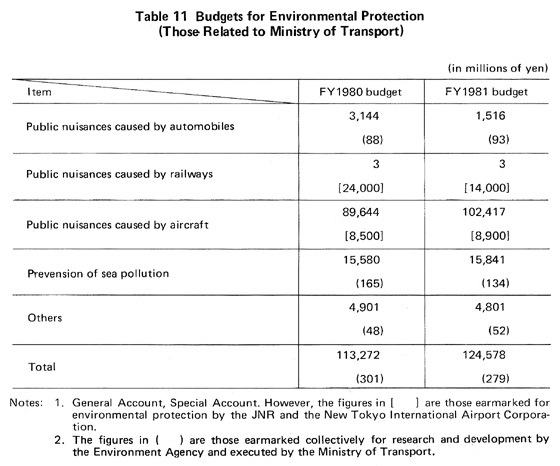
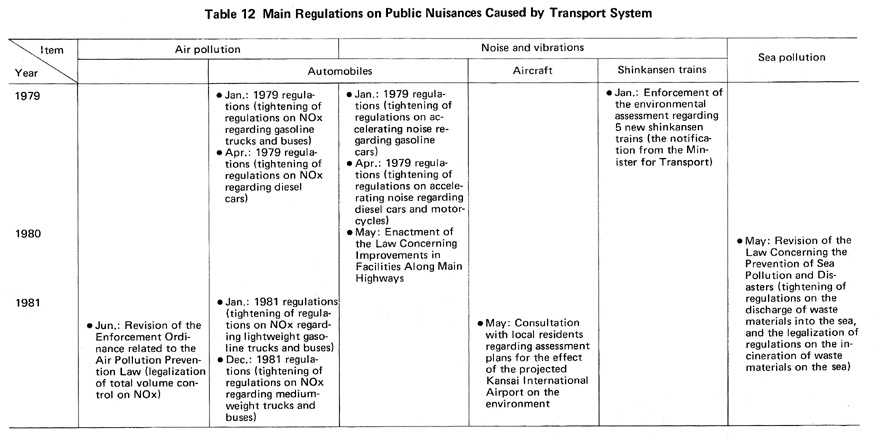
The Ministry of Transport has implemented various measures to protect the
environment from public nuisances caused by the transport means.
Table 11 shows the details of such measures in relation to their funds.
Table 12 deals with various
regulations involving such measures.
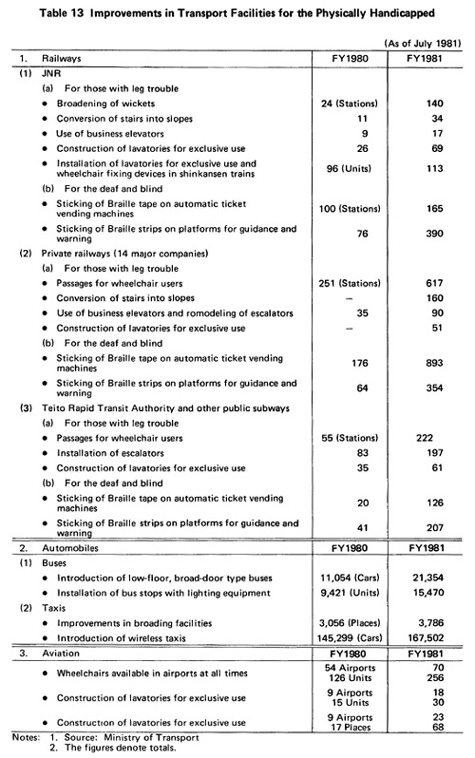
The Ministry of Transport has instructed the transport operators to promote various measures to facilitate the trips of physically handicapped persons as part of their passenger services. Table 13 shows improvements in various transport-related facilities for the physically handicapped. It is necessary to promote further measures for the physically handicapped with a view to facilitating their social participation instead of merely regarding them as the socially weak who need special assistance.
|
|
|