 |
 |
 |
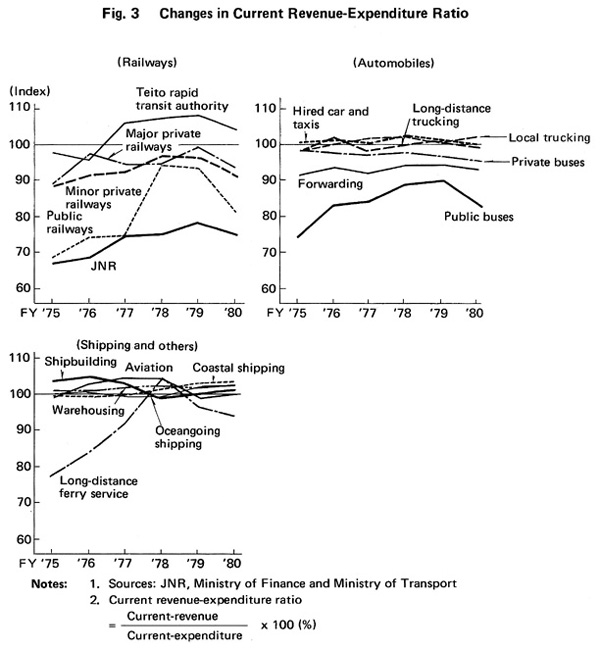
The stagnation in economic activities in fiscal 1980 brought a severe business
climate to many transport-related industries consisting mainly of small and
medium enterprises. In addition to the stagnant demand for transport, the sharply
increased personnel and fuel costs pressed transport operations hard, bringing
down their management indicators, including the current revenue-expenditure
ratio. (Fig. 3).
At present, the transport operators face the following problems: 1) the rising
fuel, personnel and other costs press their operations; and 2) public transportation
in sparsely populated areas has become increasingly difficult to maintain as
a business operation.
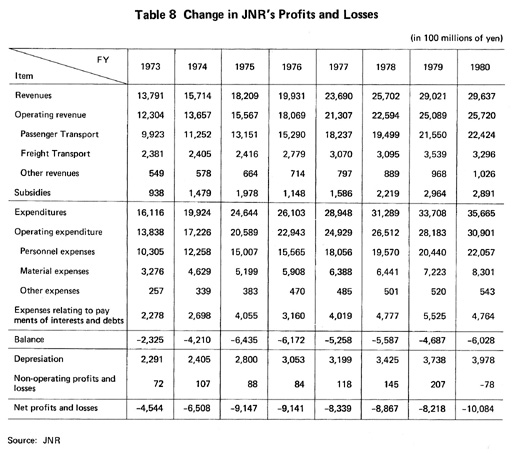
Since fiscal 1975 the JNR has suffered a deficit totaling more than ¥800
billion each year, and its operation has almost reached crisis proportions.
(Table 8) To tide over the crisis,
the "final" management improvement program was worked out in May 1981, which
calls for the following:
|
1) |
Greater emphasis to be placed in passenger transport between cities or within metropolitan areas where the railway can make the best of its characteristics. |
|
2) |
The work system to be reexamined, efficiency to be heightened through mechanization and use of outside resources, and the number of employees to be reduced to 350,000 by fiscal 1985 |
| 3) | Revenues to be secured by adequate fare increases or through the development of new projects |
| 1) | Labor's supply-demand situation has been relaxed at greater rates than in other sectors. |
| 2) | The working hours, mainly in the trucking industry, are longer than the average of all industrial sectors. |
| 3) | The average age of workers, mainly in the road transport industry, has risen conspicuously in recent years |
|
|
|